項(xiàng)目-幻燈片1.jpg)
1、 Why do we need to do dust explosion prevention?
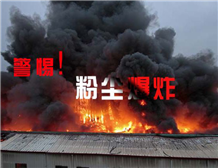
1. Dust explosion event. Dust, in the impression of many people, does not explode. It was not until the nine consecutive explosions at Harbin Linen Factory and the dust explosion at Xingang Silo in the 1980s (on the morning of December 10, 1981, due to the installation of electronic scales requiring the use of air welding for construction, the dust inside the second floor material pipe was not thoroughly cleaned before construction. During the operation, the dust accumulation in the material pipe was ignited, causing dust explosions and cascading explosions in the silo group through various connecting pipes, resulting in 28 of the 33 cement cylinders, including the star cylinder, being lifted off and 7 people being injured, including one severely burned), that people began to pay attention. In August 2008, a dust explosion occurred in the United States, causing the entire factory area to be paralyzed and scrapped. In mid October 2009, two silos in a feed factory in Fujian experienced dust explosions in the early morning, causing system paralysis. At around 7:37 am on August 2, 2014, a suspected dust explosion occurred in the automotive wheel polishing workshop of Zhongrong Metal Products Co., Ltd. in Kunshan Development Zone, Jiangsu Province during the production process, causing multiple casualties. Due to the opposite nature of dust explosions compared to gunpowder, the most terrifying types of dust explosions are secondary and tertiary.... Explosion. The explosion reignited a lot of accumulated dust and caused multiple explosions.
2. What is a dust explosion? Dust explosion is a phenomenon where a dust cloud encounters a heat source (open flame or temperature) within the upper and lower limits of the explosion, and the flame instantly spreads throughout the entire mixed dust space. The chemical reaction rate is extremely fast, and a large amount of heat is released, resulting in high temperature and pressure. The energy of the system is converted into mechanical work and radiation of light and heat, which has strong destructive power. (Dust cloud refers to a mixture of high concentration combustible dust suspended in combustion supporting gas and combustion supporting gas)
3. Three conditions for dust explosion. Dust explosion should meet three conditions, namely that the dust itself is explosive; Dust must be suspended in the air and mixed with the air to an explosive concentration; There is sufficient thermal energy (ignition source) to cause dust explosions. Compared to gas explosions, dust explosions require a higher minimum ignition energy. Therefore, a sufficiently strong thermal energy source is also one of the necessary conditions for the formation of dust explosions.
4. The process of dust explosion. The explosion of dust can be regarded as the formation of the following three steps: the first step is the rapid dry distillation or gasification of suspended dust under the action of a heat source, producing combustible gases; The second step is to mix combustible gas with air and burn it; The third step is to transfer the heat released by the combustion of dust to nearby suspended or blown dust through thermal conduction and flame radiation. These dust particles are heated and vaporized, causing the combustion cycle to continue. As each cycle progresses, the reaction rate gradually increases, and through intense combustion, an explosion is finally formed. This explosion reaction, as well as the explosion flame velocity, explosion wave velocity, explosion pressure, etc., will continue to accelerate and increase, and will develop in a leapfrog manner
5. Characteristics of dust explosion.
(1) Multiple explosions are the biggest characteristic of dust explosions;
(2) The minimum ignition energy required for dust explosion is relatively high, generally above ten millijoules;
(3) Compared with combustible gas explosions, dust explosions have a longer induction period and a slower pressure rise, lasting for tens of seconds, which is tens of times that of gases. Due to the prolonged duration of high pressure, the released energy is large and the destructive power is strong.
6. The hazards of dust explosions.
(1) Has extremely strong destructive power.
(2) Easy to cause secondary explosions.
(3) Can produce toxic gases.
2、 What kind of dust can cause an explosion?
1. Explosive dust includes:
(1) Metals (such as magnesium powder, aluminum powder, titanium powder, etc.)
(2) Coal (such as coal powder)
(3) Grain (such as flour, sugar powder, corn flour, potato flour, dried milk powder, starch, etc.)
(4) Feed (such as blood meal, fish meal, etc.)
(5) Agricultural and sideline products (such as cotton, tobacco, tea dust, etc.)
(6) Forest products (such as paper powder, wood powder, fiber dust, etc.)
(7) Synthetic materials (such as plastics, dyes, etc.)
2. Production processes that are prone to dust explosions:
(1) Polishing and crushing process
(2) Gas-solid separation process
(3) Dry dust removal process
(4) Drying process
(5) Pneumatic transportation process
(6) Cleaning and blowing process
3. Equipment prone to dust explosions:
(1) Dust collector
(2) Dust collector
(3) Pneumatic Conveyor
(4) Drying machine
(5) Grinding machine
(6) Silo
3、 How to do dust explosion prevention?
Due to the three elements of dust combustion and explosion (combustibles, combustion aids, ignition sources), dust as a combustible cannot be avoided based on the operating conditions of the system and can only be controlled to a limited extent; Air as a combustion aid cannot be controlled; The easiest to control is the ignition source. Therefore, the focus of dust explosion prevention work is to control ignition sources. The main control measures for dust explosion prevention are as follows:
1. Measures to prevent the generation of ignition sources:
(1) Smoking, lighters, matches, and other ignition materials are strictly prohibited in the production area. Flammable and explosive materials are also strictly prohibited.
(2) It is strictly prohibited to enter the dust production site wearing shoes with iron codes and nails; It is strictly prohibited to use iron tools to strike walls, metal equipment, pipelines, and other objects.
(3) Enter enclosed or semi enclosed spaces for work. Before starting homework, ensure proper ventilation, wear anti-static work clothes and shoes, wear dust masks, safety helmets, and safety belts; During homework, it is strictly prohibited to use mobile phones or non explosion proof intercoms. Explosion proof tools such as copper, aluminum, wood, and bamboo should be used for cleaning operations.
(4) Pay attention to the inspection of mechanical equipment, especially carefully check whether the protective device of the motor junction box is damaged, remove dust accumulation, and prevent loose joints or fires caused by short circuits in electrical circuits.
2. Measures to control ignition sources. The coal transportation system should try to avoid hot work as much as possible. When hot work is necessary for maintenance, renovation and other projects, the hot work permit system must be implemented. During hot work operations, it is necessary to:
(1) Stop all dust cleaning operations.
(2) The area within 10 meters of the homework site (including the floor) should be cleaned and rinsed with water to get wet. The inner walls of equipment that requires hot welding and cutting must be cleaned of accumulated dust.
(3) All windows, entrances, and explosion vents on the homework site must be opened. The pipeline connected to other sealed containers must be dismantled and sealed with non combustible materials to completely isolate the hot work area from the pipeline and sealed container.
(4) All combustibles within a 10 meter radius of the work site should be removed from the work area as much as possible. Combustible buildings or objects that cannot be removed must be protected with non combustible materials and monitored throughout the entire process by dedicated personnel equipped with fire-fighting equipment.
(5) All detachable equipment and pipelines should be dismantled and transported to a safe area for hot work operations.
(6) All holes on the floors and walls within a 10 meter radius of the work site, as well as ventilation and dust removal suction ports, should be tightly blocked to prevent flames from entering.
(7) Hot work personnel must strictly implement safety measures and strictly follow operating procedures in accordance with the requirements of hot work approval and the "eight no's", "four requirements", and "one clear" requirements for hot work. The equipment and facilities used must comply with safety technical requirements.
(8) During homework, there must be a safety officer on site to supervise, and a dedicated person must be assigned to monitor the fire. Adequate and suitable firefighting equipment and water supply pipelines should be prepared, and the work site should be watered while operating to ensure timely cooling and extinguishing of surrounding sparks.
(9) After the homework is completed, the hot work personnel and the fire watching personnel should jointly extinguish the residual fire traces, clean the work site, wet the surrounding area with water, check and confirm that there are no residual fire traces, and the fire watching personnel should stay on site to monitor for at least one hour. After inspection and confirmation of safety, they can evacuate the site and conduct regular inspections within 8 to 24 hours after hot work to ensure safety.
3. Explosion proof measures for equipment and facilities.
(1) Explosion proof measures in structural design.
1) Requirements for equipment and material selection
The material of the electrical equipment casing should have good thermal stability, sufficient strength, and be able to withstand explosive pressure without damage or deformation. Its explosion-proof joint surface should be able to withstand explosions without transmitting them
2) Requirements for maximum surface temperature of equipment
One of the main factors preventing dust ignition is to limit the formation of the highest surface temperature of the dust shell. On the one hand, due to the inevitable heating of electrical components, it is particularly necessary to limit the maximum surface temperature range of electrical equipment to ensure safety. On the other hand, due to the different ignition temperatures of different substances, the range of the highest surface temperature of electrical equipment should also vary. The maximum surface temperature of gas electrical equipment is consistent with that of dust electrical equipment.
3) Requirements for non-metallic components
The non-metallic components of the equipment should also be able to meet the heat and cold resistance requirements of relevant standards.
4) Requirements for IP protection
According to the requirements of the national standard GB12476.1, the casing of dust explosion-proof electrical equipment must also meet the following two conditions:
a、 Dustproof enclosure: Although it cannot completely prevent dust from entering, the amount of entry is not enough to affect the normal operation of electrical equipment. The enclosure has a level 5 ability to prevent foreign objects;
b、 Dust tight shell: The structure of the shell is designed as a dust-proof structure, and dust cannot enter. The shell has a level 6 ability to prevent foreign objects.
(2) Explosion proof measures for dust removal and dust production equipment. For dust generation or removal systems, emphasis should be placed on eliminating ignition points, increasing wind speed, or reducing dust concentration in stages. In such conditions and environments, changing the dust concentration is neither objective nor economical. We can only increase the operating wind speed, operate under negative pressure, use explosion-proof fans and motors, eliminate ignition points, use flame-retardant and anti-static materials in the system, have good grounding, explosion-proof and cleaning ports, and have pressure, temperature and other danger prediction and monitoring systems. When a danger occurs in the system, the main engine will automatically stop working, and each explosion-proof and explosion suppression system will automatically work. The dust removal system will be started 10 minutes before the production equipment starts, and the dust removal system will stop working 10 minutes after the production equipment stops working.
(3) The main explosion-proof measures taken from the production process, selection and layout of electrical equipment.
4. Explosion venting, explosion suppression, and explosion isolation measures. For dust explosions: On the one hand, it is to eliminate the factors that cause dust explosions and prevent their occurrence. On the other hand, it is to control the explosion range and reduce the losses caused by the explosion. In situations where explosive conditions have formed due to certain environmental factors or explosive factors cannot be temporarily eliminated, explosion venting, suppression, and isolation will reduce or control the losses caused by explosions.
5. Strengthen the management of equipment and facilities. In daily life, it is necessary to strengthen the inspection of mechanical equipment such as equipment and facilities, check for aging, heating, wear, impact sparks, strong vibration, poor contact, poor grounding, leakage, and decreased dust removal efficiency. If hidden dangers are found, they should be rectified in a timely manner and daily maintenance work should be done to ensure that the safety devices of mechanical equipment are in good technical condition (especially to check the dust removal bags inside the dust collector to prevent loose friction and collision at the bag mouth connection from causing sparks).
(1) During homework, it is necessary to strengthen inspections and pay attention to the operation of machine electrical equipment and circuits. If any abnormal situations such as metal collision, abnormal noise, temperature rise, sparks, or obvious deformation are found in the equipment, it should be stopped immediately for timely maintenance and elimination of hidden dangers. It is not allowed to continue working at risk.
(2) Various friction components of mechanical equipment should be lubricated and oiled on time to prevent overheating and fire and explosion. The temperature of the bearings used on the conveyor should be controlled, and once the temperature exceeds 200 ℃, the machine should be stopped in advance.
(3) Timely handle equipment oil leaks and other flammable materials. It is not allowed to store oil and other flammable materials in the production area.
6. Remove accumulated dust to prevent explosions. The harm of dust accumulation cannot be underestimated, as it is the most important and dangerous source of dust for explosions. The state of dust accumulation in dust explosions is more dangerous than suspension, with the highest increase in explosion pressure and the greatest destructive power caused. So effectively eliminating dust accumulation is one of the main measures to prevent dust explosions. Require on-site shift cleaning and weekly cleaning. When cleaning, it is advisable to mainly use vacuuming and rinsing, but wet cleaning methods such as spraying should not be used, as combustible dust can easily produce combustible gases at a certain temperature and evaporate in the space. Prohibit the use of cleaning methods that can cause dust and air to fly in enclosed spaces (such as blowing with compressed air).
7. Dust control.
The general methods for dust control include dust suppression, dust sealing, dust removal, and dust discharge. The selection and treatment of coal transportation in power plants based on the nature of dust sources mostly adopts three methods: dust suppression, dust sealing, and dust collection. Generally, these three methods are used in combination.
(1) Vacuuming: Vacuuming is the most commonly used method to reduce dust by using a fan to extract dusty air from the coal guide groove, creating a slight negative pressure inside the groove. The most commonly used method to reduce indoor dust content in coal transportation systems is vacuuming. Dust removal points are set up at the guide chute of the belt conveyor and the raw coal hopper in the coal bunker to create negative pressure inside the guide chute and raw coal hopper, suppressing dust from flying out. The equipment used for vacuum cleaning mainly includes bag filters, high-voltage electrostatic precipitators, etc.
(2) Dust suppression: When air containing dust encounters water and increases humidity, the water and dust particles bond together to form larger particles that fall down. Water spraying is one of the effective methods for dust suppression in coal transportation systems. However, the amount of water sprayed should not be too much and should be moderate, otherwise side effects such as belt slippage and coal sticking may occur. Usually installed at the outlet of the belt conveyor guide chute, the bucket wheel of the bucket wheel machine, the inlet of the impeller coal feeder, and the inlet of the coal chute.
(3) Dust sealing: Coal dust needs to be spread and diffused by the flow of air. Dust sealing is to isolate the air, separating clean air from air with dust. Thermal power plants generally install protective covers at the head of the belt conveyor and coal guide slots at the tail to prevent a large amount of coal dust from flying when coal falls into the coal chute. In order to seal the dust, the volume of the protective cover and coal guide groove should be as large as possible, and the upper cover should be in a circular arc shape with uniform pressure distribution, which can reduce the air flow inside the cavity. However, due to the limitation of belt width, uneven pressure inside the coal guide groove is inevitable. The pressure is highest at the coal drop point, and the further away from that point, the lower the pressure. To reduce the pressure difference, a circulation bypass pipe is usually installed.
4、 Fire emergency measures
1. Firefighting equipment and facilities must be equipped as required.
2. In the event of a fire or explosion, the equipment should be immediately stopped and the power supply disconnected.
3. When extinguishing a fire, avoid lifting up accumulated dust. It is not advisable to use water to extinguish fires, as water can react with heat and burning coal powder, producing explosive mixtures.
目 - 2021-11-09T091045.325 (82).jpg)


目 - 2021-11-09T091045.325 (83).jpg)

 |
||||||
 |
||||||
|
||||||
 |
||||||
|
||||||
 |